The Experience
Every session follows a clear flow, shaped by the unique energy of the group.
1- Sitting with the Muse
It all begins in a quiet space, inside or outside the museum, where we meet and create a sacred space of play.
This includes a guided meditation that introduces us to the spirits of the land we sit on, the spirit of the museum as an institution, and our own Muses
2- Entering the Museum
We then move into the museum and follow resonance, finding objects that connect with what emerged in the opening meditation.
3- Channeling the Muse
We take turns looking at and speaking about the objects that called to them, giving voice to memory, presence, and imagination.
4- Gratitude to Genius
Sessions end with a closing ritual shaped entirely by what emerged in the “interspace” created by the collective genius of the group.
5- Reseeding Cosmos
Because each group brings different transmissions, no two Phenomenal Museum sessions are ever the same. The structure shifts according to the contributions, energies, and stories that arise. Each activation seeds the next one.
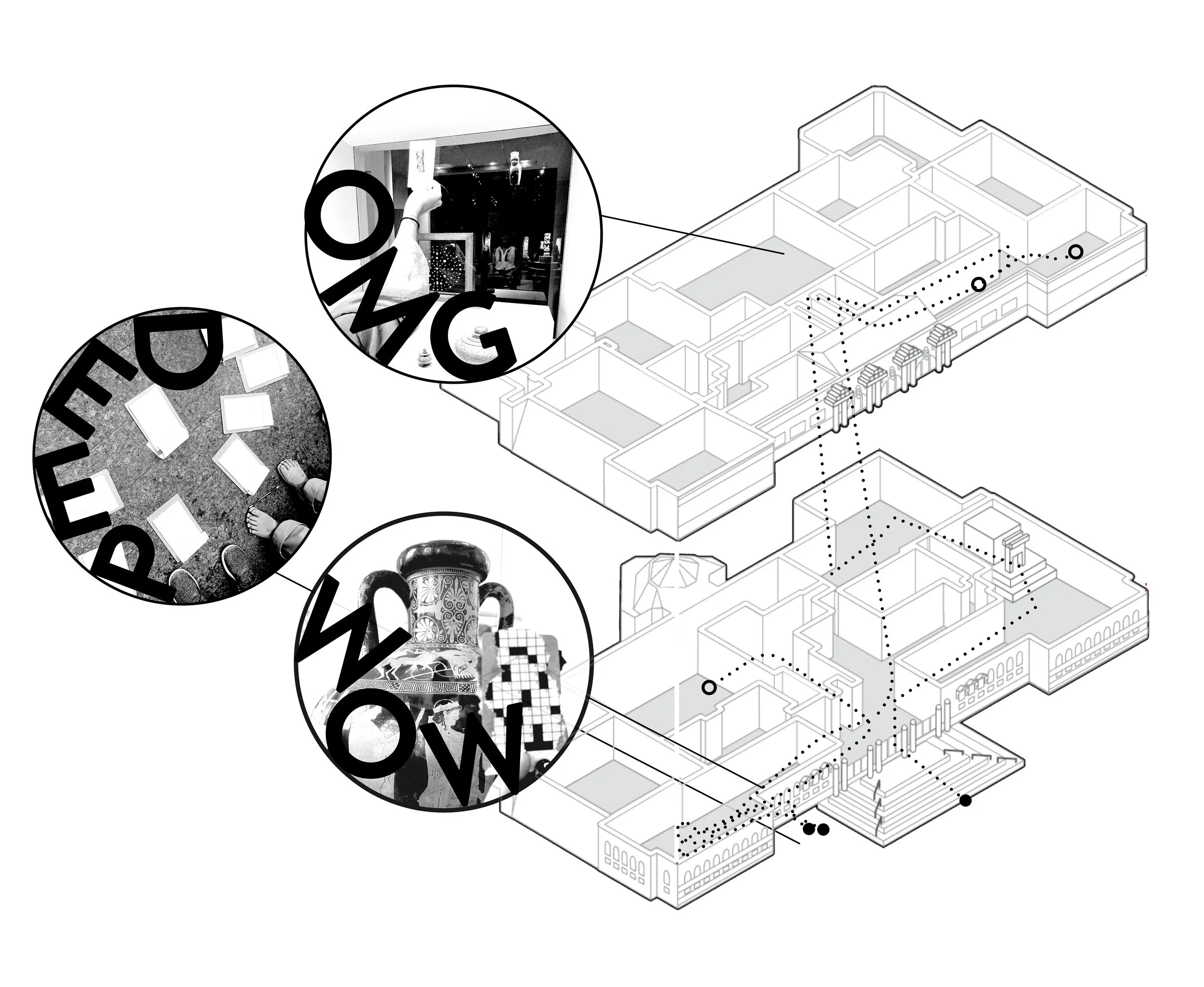
The Shift Phenomenal Museum Creates
Current Museum Experience
Art is at a distance
You follow a map
You read its label
The museum is a space of observation
Phenomenal Museum Experience
You meet art directly
You follow what calls you
You engage with its presence
The museum becomes a space of relationship.
A Phenomenal Process
-
Phenomenal Museum is a series of teachings and ritual engagements led by Jessica Kung to recover the museum as a site of spiritual and creative activation. In these happenings, participants engage with objects of art and culture in the museum using practices of attention, breathing, and energy work drawn from Yogic and Buddhist traditions, as well as forms of collective creative engagement designed to bring one’s own experience, imagination, and sense of play to the work. These rituals hold space for the collective practice of what we’ve come to call a practical phenomenology.
-
The term phenomenal emerges from “phenomenology” - a tradition in Western thought where the viewer assesses the way “things” appear to us in lived experience— in place of a perception that gazes at “things” through an objective or impersonal framework. This tradition diverges from another lineage of thought, from the lineage of René Descartes, that focuses attention on that which can be known objectively and with certainty through empirical methods of research. For thinkers in the phenomenological tradition, it is important to describe the world not according to what it is “objectively” but according to how it acts on and appears to us.
-
Practical phenomenology is our name for an ensemble of techniques we use for making ourselves more porous to the spirit and influence of art than we tend to be as passive or distracted spectators. These techniques work against the buffering of the self that our modern epistemologies have made the norm of experience—a buffering that “flattens” experience, reducing art to objects for disengaged thought and perception—and help us return to an intimate, inspirited relation with the art object. This intimate relation is more akin to the one the ancient Greeks had with their art: for them, a statue of a god was a point of direct access to that god, and a mouseion was a place for communing with the muse.